- Apr 03, 2026 / Online Tutoring
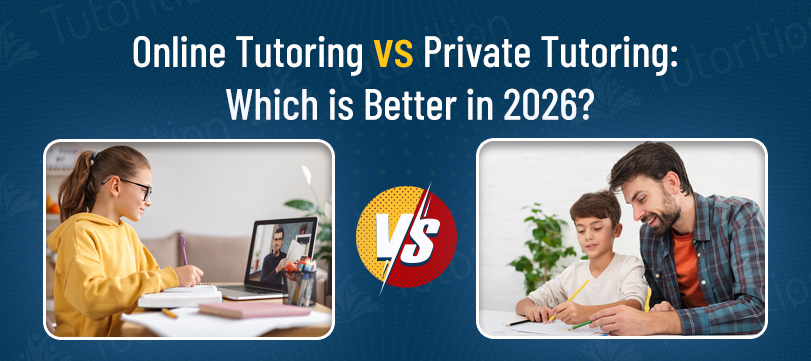
Introduction: The 7 PM Dilemma Every Student Faces
It’s 7 PM.
You’ve just finished school (or work), you’re tired, and you still have a tutoring session scheduled. Now comes the question:
- Do you wait for a tutor to arrive (or travel across town)?
- Or do you just open your laptop and start learning instantly?
This small daily decision reflects a much bigger shift happening in education in 2026.
Learning is no longer confined to a physical space. Students today want control, flexibility, and results - not just lectures. At the same time, many still believe that traditional, face-to-face tutoring offers a deeper connection and better discipline.
So which one actually works better?
This blog doesn’t just compare online tutoring vs private tutoring - we’ll help you decide what truly fits your lifestyle, learning behavior, and academic goals.
What is Online Tutoring?
Online tutoring is a modern approach to learning where students connect with tutors through digital platforms instead of meeting in person.
How It Works in 2026
Online tutoring in 2026 is far more advanced than simple video calls. It includes:
- Live interactive sessions with screen sharing
- AI-powered personalized learning plans
- Digital whiteboards for real-time explanations
- Session recordings for revision
- Progress tracking dashboards
Students can learn from anywhere—whether at home, while traveling, or even during short breaks in their daily routine.
Key Features
- Flexible scheduling that fits your routine
- Access to expert tutors from across the world
- Use of advanced learning tools and technology
- Affordable pricing compared to traditional tutoring
Online tutoring is especially popular among students preparing for competitive exams, college courses, and skill-based learning.
What is Private Tutoring? (Why It Still Matters)
Private tutoring is the method most parents trust - and for good reason.
It’s familiar, structured, and personal.
What Makes It Effective?
- A tutor sitting right next to you
- Immediate correction of mistakes
- Physical presence that encourages focus
For students who struggle with discipline or need constant supervision, this environment can feel more supportive.
But Here’s the Catch
Private tutoring often depends heavily on:
- The availability of a good tutor nearby
- Fixed schedules (which may not suit every student)
- Time spent commuting instead of learning
So while it offers comfort, it doesn’t always offer flexibility or scalability.
Real-Life Scenarios: What Actually Works for Different Students
Sometimes the best way to decide isn’t theory - it’s seeing what works in real situations.
Scenario 1: The Busy School Student
Riya has school from 8 AM to 3 PM, followed by homework and extracurricular activities. Traveling for private tutoring adds another 1–2 hours to her day.
What works better?
Online tutoring.
She can attend sessions from home, save travel time, and even revisit recorded lessons before exams.
Scenario 2: The Competitive Exam Aspirant
Aman is preparing for exams like JEE/NEET and needs access to expert teachers and advanced problem-solving techniques.
What works better?
Online tutoring.
It gives him access to top educators, mock tests, analytics, and doubt-solving sessions—all in one place.
Scenario 3: The Easily Distracted Student
Rahul struggles to stay focused when studying alone and often gets distracted by his phone.
What works better?
Private tutoring.
The physical presence of a tutor helps him stay disciplined and accountable.
Scenario 4: The Remote Area Student
Anjali lives in a small town where quality tutors are limited.
What works better?
Online tutoring.
It removes location barriers and connects her with experienced tutors
Online Tutoring vs Private Tutoring: Quick Comparison
Most blogs compare features. But students don’t choose features - they choose experiences.
Here’s how the two actually feel:
| Experience Factor | Online Tutoring | Private Tutoring |
|---|---|---|
| Control | You decide pace & timing | Tutor controls structure |
| Energy Level | Learn when you're fresh | Fixed timing, sometimes forced |
| Learning Style | Interactive & visual | Verbal & traditional |
| Time Efficiency | Zero travel | Time lost in commuting |
| Adaptability | High | Limited |
The real difference?
Online tutoring adapts to you. Private tutoring expects you to adapt to it.
Advantages of Online Tutoring in 2026
Learn from Anywhere
One of the biggest benefits is convenience. You don’t need to travel or adjust your entire schedule—learning happens wherever you are.
Access to Global Tutors
Online platforms allow you to learn from subject experts worldwide. This is especially helpful for niche subjects or competitive exams.
Flexible Scheduling
Whether you’re a school student or a working professional, online tutoring adapts to your availability.
Cost-Effective Learning
Online tutoring eliminates travel and infrastructure costs, making it a more affordable option for most learners.
Technology-Enhanced Learning
Features like recorded sessions, AI-based feedback, and performance tracking make learning more efficient and measurable.
Advantages of Private Tutoring
Face-to-Face Interaction
Direct human interaction can help build better communication and understanding, especially for younger students.
Personalized Attention
Private tutors can closely observe a student’s behavior, focus level, and learning pace.
Structured Discipline
Fixed schedules help students maintain a routine and stay consistent.
Fewer Digital Distractions
Offline learning reduces screen time and minimizes distractions like notifications or internet issues.
Disadvantages of Online Tutoring
- Requires a stable internet connection
- Can lead to screen fatigue over long sessions
- Limited physical supervision
- May not be ideal for very young learners
Disadvantages of Private Tutoring
- Higher costs due to travel and time
- Limited availability of qualified tutors nearby
- Time-consuming due to travel
- Lack of advanced learning tools
Which One is Better in 2026?
There’s no one-size-fits-all answer. The right choice depends on several factors:
Based on Student Type
- School students: May benefit from a mix of both
- College students: Often prefer online tutoring for flexibility
- Competitive exam aspirants: Online tutoring offers better resources and expert access
Based on Learning Style
- Visual and tech-savvy learners: Online tutoring works better
- Students needing hands-on guidance: Private tutoring may be more effective
- Self-paced learners: Online tutoring is ideal
Based on Budget
If affordability is a concern, online tutoring is usually the better option.
Based on Location
Students in remote areas benefit greatly from online tutoring due to limited access to quality tutors locally.
Hybrid Learning: The Best of Both Worlds
In 2026, many students are choosing a hybrid approach - combining online tutoring services with occasional in-person sessions.
This model offers:
- Flexibility of online learning
- Personal touch of offline interaction
- Better overall learning experience
Why Online Tutoring is Dominating in 2026
Online tutoring continues to grow rapidly due to:
- Increased digital adoption
- Demand for flexible learning
- Availability of global expertise
- Cost-effectiveness
Students today prefer convenience without compromising on quality—and online tutoring delivers exactly that.
Common Myths About Online Tutoring (And the Reality)
Even in 2026, many students and parents hesitate because of outdated beliefs.
Let’s clear them up.
Myth 1: “Online tutoring is less effective”
Reality:
Online tutoring often provides better learning tools, revision options, and expert access, making it equally—if not more—effective.
Myth 2: “Students get distracted easily online”
Reality:
Distraction depends on habits, not the format.
A focused student will learn anywhere.
Myth 3: “Private tutoring guarantees better results”
Reality:
Results depend on:
- Tutor quality
- Student effort
- Learning consistency
—not just face-to-face interaction.
Myth 4: “Online learning is only for tech-savvy students”
Reality:
Modern platforms are designed to be simple and user-friendly—even for beginners.
Myth 5: “There’s no personal connection in online tutoring”
Reality:
With live interaction, one-on-one sessions, and regular feedback, online tutoring can still build strong student-tutor relationships.
How to Choose the Right Tutoring Option
Before making a decision, ask yourself:
- Do I need flexible learning hours?
- What is my budget?
- Do I learn better online or in person?
- Do I need access to specialized tutors?
Quick Checklist
✔ Choose online tutoring if you want flexibility, affordability, and global access
✔ Choose private tutoring if you prefer face-to-face interaction and structured learning
Why Tutorition is Built for This New Learning Era
If you’re considering online tutoring, Tutorition offers a complete learning solution designed for modern students.
You get:
- Expert tutors across subjects
- Personalized learning plans
- Flexible scheduling options
- Affordable pricing
- Exam-focused preparation
Whether you’re preparing for school exams or competitive tests, Tutorition helps you learn smarter and achieve better results.
Recommended Read : 2026 Tutoring Trends: What Tutors Need to Know to Stay Relevant
Conclusion
Both online tutoring and private tutoring have their own strengths and limitations. The best choice depends on your individual needs, learning style, and goals.
However, in 2026, online tutoring is clearly leading the way due to its flexibility, accessibility, and cost-effectiveness.
If you’re looking for a smarter and more convenient way to learn, online tutoring might just be the perfect fit for you.
FAQs
1. Is online tutoring better than private tutoring?
It depends on your needs. Online tutoring is more flexible and affordable, while private tutoring offers direct interaction.
2. Is online tutoring effective for exams?
Yes, especially with features like recorded sessions, expert tutors, and personalized plans.
3. Which is cheaper: online or private tutoring?
Online tutoring is generally more affordable.
4. Can online tutoring replace in-person tutoring?
For many students, yes - but some may still prefer a hybrid approach.
5. What is best for kids: online or offline tutoring?
Younger kids may benefit from in-person tutoring, while older students often prefer online learning.
6. Is online tutoring suitable for beginners?
Yes, online tutoring is designed to be beginner-friendly. Most platforms offer simple interfaces, step-by-step guidance, and personalized support to help new learners get comfortable quickly.
0 comment