- Feb 05, 2026 / Science Tutoring
Introduction
Science is the backbone of modern education. From understanding the laws of physics to exploring the complexities of chemistry and biology, science equips students with critical thinking, problem-solving, and analytical skills essential for success in academics and future careers.
Yet, many students struggle with science. In fact, studies show that over 70% of students report difficulty in at least one science subject. This is not just about memorizing formulas or definitions - understanding concepts deeply and applying them to real-world scenarios is often the biggest challenge.
This is where a science tutor can make all the difference. By providing personalized guidance and one-on-one support, science tutoring helps students not only improve their grades but also develop confidence, curiosity, and a genuine interest in science. Today, in a world increasingly driven by STEM careers, having a science tutor is more important than ever.
Why Science Is Challenging for Students?
Science is a fascinating subject, but it can often feel overwhelming for many school students. Unlike some other subjects, science requires a combination of memorization, conceptual understanding, and practical application. Students are expected not only to learn formulas and definitions but also to apply them to experiments, problem-solving, and real-life scenarios. The pace of classroom teaching, combined with the increasing complexity of the curriculum, can make it difficult for students to keep up. Without additional support, students may feel frustrated, lose confidence, and even develop a dislike for science subjects.
Science can feel overwhelming for students due to several reasons:
- Complex and Abstract Concepts: Topics like Newtonian physics, chemical reactions, or cellular biology are not always easy to visualize. Many students know the formulas but struggle to understand how to apply them in practical situations.
“You could memorize every equation in physics and still fail to solve a single real-world problem without proper guidance from a physics tutor.” - Hands-On Experiments: Science is not just theoretical. Lab experiments demand careful observation, analysis, and accurate execution. Without supervision, students may fail to connect theory with practice.
Example: A chemistry student might memorize the steps of a reaction but fail the lab practical without a chemistry tutor to guide them through it safely. - Large Classrooms: Teachers often cannot give individual attention to every student. Many children end up confused, frustrated, or falling behind.
- Curriculum Pressure: Science syllabi are constantly evolving, introducing new topics and assessment methods. Students often need extra support to stay on track.
A science tutor addresses these challenges by breaking down complex topics, providing practical examples, and giving students the attention they need to fully grasp concepts.
Benefits of Having a Science Tutor
Having a science tutor can transform the way students approach science. While classroom learning provides the basics, it often cannot address each student’s unique challenges or learning pace. A tutor offers personalized attention, guidance, and strategies that cater to individual strengths and weaknesses. Beyond just improving grades, working with a tutor can build confidence, spark curiosity, and make science more enjoyable. For many students, online science tutoring becomes the key to overcoming difficulties and unlocking their full potential in subjects like physics, chemistry, and biology.
Here are the main benefits of having a science tutor:
1. Personalized Attention
A key advantage of having a science tutor is one-on-one guidance. Tutors tailor lessons according to the student’s learning style, strengths, and weaknesses. This personalized attention ensures that every difficult concept is understood before moving forward.
Example: A student struggling with chemical equations can receive step-by-step explanations and practice problems tailored to their pace, which isn’t always possible in a crowded classroom.
2. Better Understanding and Improved Grades
Science tutoring provides structured guidance that targets weak areas, reinforces strong topics, and helps students improve academically. Studies show that students who work with tutors can see a 15–30% improvement in exam scores within a semester.
Fact: “Students who learn with a science tutor are twice as likely to score in the top 20% of their class.”
3. Builds Confidence
Science anxiety is real. Many students shy away from science subjects, fearing they won’t succeed. Science tutors provide encouragement, clear explanations, and regular practice, which builds confidence.
Example: A student hesitant to participate in physics class began asking questions and engaging in problem-solving after sessions with a physics tutor. Confidence gained through tutoring often leads to improved class participation and better academic results.
4. Encourages Interest in Science
A skilled science tutor makes lessons engaging by connecting concepts to real-world examples. This approach not only helps students understand better but also sparks curiosity.
Example: A student who disliked biology became fascinated by life sciences after a biology tutor demonstrated concepts using simple experiments at home. The student later participated in a school science fair.
5. Flexible Learning Pace
Students learn at different speeds. A science tutor allows students to revisit challenging topics at their own pace, ensuring mastery before moving to new concepts. This reduces stress and promotes a deeper understanding of science.
Types of Science Tutors
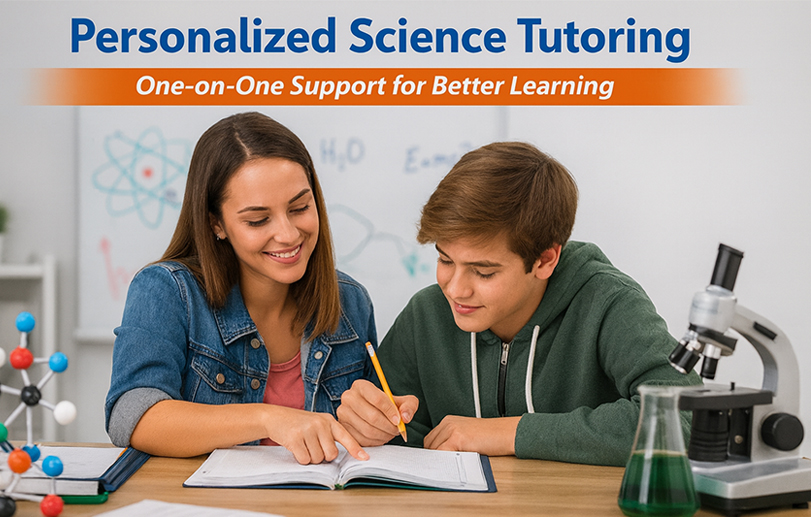
Students can choose from different types of online science tutors depending on their goals:
- In-Person Tutors: Perfect for hands-on experiments, immediate feedback, and interactive lessons.
- Online Tutors: Provide flexibility, access to digital resources, and interactive tools like simulations and quizzes.
- Subject-Specific Tutors: Physics tutors, chemistry tutors, and biology tutors focus on specialized areas for deeper understanding.
- Exam-Focused Tutors: Help students prepare for school board exams, competitive tests, or scholarship assessments.
“Not all tutors are equal - a physics tutor who sticks to textbooks might not help a student apply concepts in real-life scenarios, while one who uses practical examples can make even the hardest topics enjoyable.”
How to Choose the Right Science Tutor?
Finding the right science tutor can make a significant difference in a student’s learning journey. Not all tutors are equally effective, and choosing the wrong one can lead to frustration, confusion, or stagnation. A great tutor does more than explain concepts—they inspire curiosity, boost confidence, and adapt to a student’s unique learning style. Parents and students should carefully consider several factors before making a decision to ensure that tutoring sessions are productive, engaging, and tailored to the student’s needs.
Here are some key considerations when choosing an online science tutor:
1. Qualifications and Experience
Look for a tutor with strong academic qualifications in the subject they teach, as well as teaching experience. Tutors with hands-on experience in classrooms or labs can break down complex topics into understandable steps, making even difficult concepts approachable. Experienced tutors are also more likely to anticipate common mistakes and misunderstandings, helping students avoid them early on.
2. Teaching Style
Each student has their own pace and style for understanding complex concepts. The right science tutoring will help tutors adapt their teaching style to match the student’s learning pace and preferences. Some students may benefit from visual explanations and diagrams, while others may prefer hands-on experiments or problem-solving exercises. Tutors who encourage questions and provide continuous feedback create a supportive learning environment where students feel confident to explore challenging topics.
3. Reviews and Testimonials
Hearing from other students and parents can give you valuable insight into a tutor’s effectiveness. Positive testimonials often highlight a tutor’s ability to explain concepts clearly, improve grades, and motivate students. Additionally, asking for references or trial sessions can help you gauge whether a tutor is a good fit for your child’s learning style and personality.
4. Flexibility and Availability
Consistent learning is essential for academic improvement. Ensure that the tutor’s schedule aligns with the student’s availability, whether for in-person sessions or online lessons. A tutor who can adjust to the student’s timetable ensures that sessions are uninterrupted and progress is steady.
5. Additional Skills and Attributes
Beyond subject knowledge, a great science tutor should be patient, encouraging, and able to make lessons engaging. They should also be able to relate science concepts to real-life examples, making learning more interesting and meaningful. A tutor who tracks progress and adjusts strategies based on results can provide long-term benefits, not just short-term grade improvements.
Tip: Even a tutor with just a few years of classroom or lab experience can often explain concepts in ways that textbooks or online videos cannot, giving students clarity and confidence in the subject.
What Happens Without the Right Science Support?
Students who don’t get proper guidance in science often don’t just struggle with grades - they may miss out on future academic and career opportunities. A strong foundation built with the help of a science tutor can make a big difference later in life.
Missed STEM Career Paths
Weak science fundamentals can close doors to careers in medicine, engineering, AI, biotechnology, and research — some of the fastest-growing and highest-paying fields.
Lower Confidence in Competitive Exams
Many entrance exams for top colleges heavily test physics, chemistry, and biology. Without a science tutor, students may avoid these paths simply because the subjects feel “too hard.”
Fewer Scholarship Opportunities
Strong performance in science often leads to scholarships and academic recognition. Students without proper support may miss these financial and academic advantages.
Limited Problem-Solving Skills
Science builds analytical thinking. Students who struggle early may fall behind in logical reasoning skills that are valued in almost every high-paying profession.
Losing Interest in Science Too Early
When science feels confusing, students may give up on it altogether - not realizing it could have led to exciting, well-paid, and meaningful careers.
With the right guidance from an experienced science tutor, students can turn confusion into confidence, opening doors to elite universities, competitive programs, and high-growth careers.
Why Science Tutors Are More Important Than Ever?
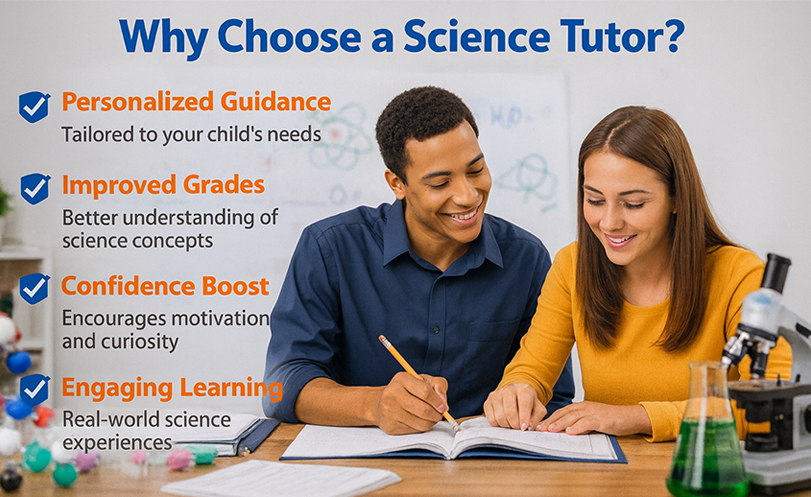
Science education is becoming more challenging than ever, with students needing to understand complex concepts, keep up with changing curricula, and perform well in exams. This is why science tutors play a crucial role in helping students succeed.
- STEM Education Emphasis: Careers in science, technology, engineering, and mathematics are growing rapidly. Students need a strong foundation early on to succeed.
- Curriculum Changes: Modern science curricula are evolving, requiring new teaching approaches and continuous support.
- Remote Learning Gaps: Many students struggle with online or hybrid classes. Tutors provide personalized attention to bridge learning gaps.
- Competitive Exams and Academic Pressure: High standards and competition demand extra guidance. A science tutor provides strategies, practice, and clarification of difficult topics.
A science tutor not only improves grades but also builds confidence and fosters a lasting interest in science.
Case Studies
Example 1:
A high school student struggling with chemistry improved from a C to an A after working with a science tutor. By using real-world examples and step-by-step guidance, the student gained confidence and excelled in exams.
Example 2:
A student hesitant in physics gained confidence through a physics tutor who related formulas to roller coasters, smartphones, and real-life mechanics. The result: better understanding, active participation, and higher grades.
These stories demonstrate how science tutors transform learning, confidence, and academic performance.
Find the Right Science Tutor Today
If your child struggles with science or wants to excel, a qualified science tutor from Tutorition can make a world of difference. Experienced science tutors provide:
- Personalized guidance
- Better understanding and improved grades
- Confidence and motivation
- Engaging, real-world learning experiences
Find a science tutor and help your child build a strong foundation in science while developing curiosity, confidence, and lifelong learning skills.
Recommended Read : Is Chemistry Really That Hard? A Tutor's Take on 6 Common Challenges
FAQs
Q1: How can a science tutor help my child improve?
A: A science tutor provides one-on-one guidance, clarifies doubts, and focuses on weak areas, leading to better understanding and higher grades.
Q2: What subjects can science tutors help with?
A: Science tutors specialize in physics, chemistry, biology, or a combination, depending on your child’s needs.
Q3: How do I choose the best science tutoring service?
A: Choose a tutoring service that offers experienced science tutors with strong subject knowledge, a teaching style that adapts to your child’s learning needs, and positive feedback or reviews from other students and parents. Look for services that provide personalized guidance, flexible scheduling, and proven results in improving understanding and grades.
Q4: Are online science tutors as effective as in-person tutors?
A: Yes! Online tutors provide interactive lessons, digital resources, and flexibility, making them highly effective for most students.
Q5: At what age should my child start working with a science tutor?
A: Children can benefit from a science tutor at any stage, from middle school to high school, especially if they need extra support or want to excel in exams.
Q6: How often should my child meet a science tutor?
A: Frequency depends on the child’s needs. Many students benefit from 1–2 sessions per week, but more frequent sessions may be helpful before exams or for challenging topics.
Q7: Can science tutors help with homework and assignments?
A: Yes! A science tutor can guide your child through homework, explain difficult concepts, and ensure they complete assignments accurately and on time.
Q8: Can science tutoring help with exam strategies?
A: Yes! Tutors provide exam-specific techniques, practice tests, and tips for time management to help students perform their best under pressure.
0 comment