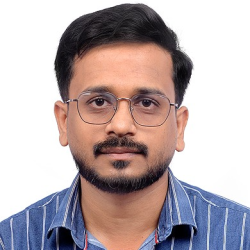
MOHAMMED ASHIQ India

iconPolitical science, Polity, International relations

iconEnglish, Malayalam

icon
icon

About Me

I have over nine years of teaching experience in Political Science, guiding students across higher secondary, undergraduate, and postgraduate levels. Throughout my career, I have taught a wide range of subjects including Indian Polity, Political Thought, International Relations, and Public Administration. My teaching journey has involved both academic instruction and mentorship for competitive examinations, particularly the Civil Services Examination (UPSC), where I have also personally appeared for the interview stage. Academically, I hold an M.A. in Political Science from Jawaharlal Nehru University (JNU) and currently pursuing Ph.D. in Political Science from the University of Calicut, and I am UGC-NET qualified and JRF Holder, which certifies my eligibility for university-level teaching in India. These credentials have provided a strong theoretical foundation, complemented by practical insights gained through years of classroom engagement and examination mentoring. My teaching methodology emphasizes: Conceptual clarity: Breaking down complex political theories and institutions into simple, relatable frameworks. Interactive learning: Encouraging discussion, debate, and critical analysis of contemporary political and international developments. Application-oriented teaching: Linking theoretical understanding to governance, public policy, and real-world case studies. Blended approach: Combining traditional lectures with digital tools, visual aids, and interactive assessments to enhance learning outcomes. Individual mentoring: Offering personalized guidance to help students develop analytical writing, articulation, and exam-specific skills. I believe effective teaching is not just about imparting information, but about inspiring curiosity, independent thinking, and civic understanding — helping learners connect Political Science to everyday governance and society.

I’m Mohammed Ashiq K, an educator and researcher in Political Science with over nine years of teaching experience. I hold an M.A. in Political Science from Jawaharlal Nehru University (JNU) and currently pursuing Ph.D. (JRF Holder) in Political Science from the University of Calicut. In addition to my academic career, I have a strong Civil Services background, having appeared for the UPSC Civil Services Interview, which deepened my understanding of governance, policy-making, and India’s administrative framework. This exposure has shaped my teaching approach — combining conceptual depth with a practical understanding of real-world governance and public affairs. My key areas of interest include Indian Polity, Political Thought, and International Relations — with a focus on connecting theoretical knowledge to practical realities of governance and diplomacy.

I’m passionate about fostering critical thinking and conceptual clarity, inspiring students to not only learn Political Science but to engage with it as a living discipline that shapes societies and leaders.

Tags
  • Polity
  • General knowledge
  • Academic guidance
  • Mentorship

Offering

Course Overview This course provides a comprehensive introduction to the theories, concepts, and practices of International Relations, exploring how states and global actors interact in a complex, interdependent world. It combines theoretical understanding with real-world applications, helping students analyze global issues such as war, diplomacy, international organizations, globalization, and India’s foreign policy. The course aims to develop critical perspectives on the changing nature of world politics and the forces shaping the global order. Course Duration Total Duration: 12 Weeks Sessions: 24 Sessions (2 sessions per week) Session Length: 2 hours each Total Teaching Time: 48 Hours Course Includes Detailed study of International Relations theories and approaches — Realism, Liberalism, Marxism, Constructivism, and Feminism. Analysis of global political structures, international organizations, and regional groupings. Examination of global issues — conflict, peace, globalization, climate change, human rights, and international law. Focused study on India’s foreign policy and its role in global and regional politics. Integration of historical perspectives (World Wars, Cold War, and post–Cold War order) with contemporary developments. Interactive lectures, case studies, simulations, and map-based learning. Access to supplementary readings, policy documents, and research materials for deeper engagement. Who Can Join Undergraduate and postgraduate students of Political Science, International Relations, or related disciplines. Learners interested in understanding global politics, diplomacy, and India’s international engagement.
Curriculum

Curriculum: International Relations

Module 1: Introduction to International Relations

  • Nature, Scope, and Evolution of International Relations as a discipline

  • Significance of studying IR in the contemporary world

  • Key Concepts: Nation, State, Sovereignty, Power, National Interest, Balance of Power, Diplomacy

  • The Evolution of the International System: From Westphalian State System to Globalization

Activities:

  • Interactive lecture: “Why study International Relations today?”

  • Concept mapping: State, Nation, and Sovereignty

Module 2: Theories and Approaches to International Relations

  • Classical and Modern Realism

  • Liberalism and Idealism

  • Marxist and Neo-Marxist Approaches

  • Constructivism, Feminism, and Postcolonialism

  • Systems Theory and Game Theory in IR

Activities:

  • Group debate: Realism vs. Liberalism — which explains international politics better?

  • Short reflection: “Can idealism survive in a realist world?”

Module 3: Instruments and Processes in International Relations

  • Foreign Policy — Meaning, Determinants, and Decision-Making

  • Diplomacy and its Techniques

  • Propaganda, Economic Statecraft, and Cultural Diplomacy

  • Role of International Law and Morality in International Politics

Activities:

  • Simulation: Negotiating a peace treaty or trade deal

  • Class discussion: “Is morality relevant in foreign policy?”

Module 4: The Inter-War and Cold War Orders

  • Causes and Consequences of the First and Second World Wars

  • League of Nations and its Failure

  • The Cold War: Origin, Phases, and Impact

  • Bipolarity and Balance of Power

  • End of the Cold War and Emergence of Unipolarity

Activities:

  • Timeline creation: Key events of the 20th century world order

  • Documentary review: The Cold War — A Brief History

Module 5: International and Regional Organizations

  • Evolution, Structure, and Functions of the United Nations (UN)

  • Major UN Organs and Specialized Agencies

  • Role of IMF, World Bank, and WTO in Global Governance

  • Regional Organizations: EU, ASEAN, SAARC, AU, SCO

  • India’s Engagement with International Institutions

Activities:

  • Mock UN simulation on a global issue

  • Chart-making: Comparison of regional organizations

Module 6: Globalization and Contemporary World Politics

  • Globalization: Meaning, Dimensions, and Impact

  • Global North–South Divide and Emerging Powers

  • Transnational Actors: MNCs, NGOs, and Media

  • Global Governance and Changing World Order

  • Role of Technology and Communication in International Relations

Activities:

  • Group presentation: “Impact of Globalization on Developing Countries”

  • Case study: Rise of emerging powers (India, China, Brazil)

Module 7: Peace, Security, and Conflict Studies

  • Theories of War and Peace

  • Collective Security and Peacekeeping

  • Nuclear Politics and Disarmament

  • Human Security and Environmental Security

  • Terrorism, Migration, and Cybersecurity

Activities:

  • Class debate: “Can there ever be a world without war?”

  • Review of UN peacekeeping missions and their success

Module 8: International Political Economy

  • Relationship between Politics and Economics in Global Affairs

  • Liberal and Marxist Perspectives on IPE

  • Global Trade and Finance Systems

  • Debt, Development, and Inequality in the Global South

  • Role of WTO and Global Financial Institutions

Activities:

  • Case study: India and WTO negotiations

  • Mini research project: Global financial crises and their political impact

Module 9: Emerging Issues in International Relations

  • Climate Change and Global Environmental Politics

  • Human Rights and Humanitarian Interventions

  • Migration, Refugees, and Global Health Governance

  • Rise of Populism, Nationalism, and Identity Politics

  • Shifts in Global Power: Multipolarity and New Alignments

Activities:

  • Seminar: “The Future of Liberal International Order”

  • Policy brief: India’s position on global climate negotiations

Module 10: India and the World

  • Evolution of India’s Foreign Policy

  • India and Major Powers: USA, Russia, China, Japan, EU

  • India and its Neighbours: SAARC, BIMSTEC, Indo-Pacific Region

  • India’s Role in the UN and Global South

  • Challenges and Opportunities in Contemporary Indian Diplomacy

Activities:

  • Panel discussion: India’s foreign policy in the 21st century

  • Map activity: India’s global engagements

Learning Outcomes

By the end of the course, students will:

  • Understand key concepts, theories, and processes in International Relations.

  • Analyze global political and economic trends in historical and contemporary contexts.

  • Evaluate the role of India in international and regional politics.

  • Develop skills for critical analysis, debate, and comparative study of international issues.

Course Overview This course offers a comprehensive understanding of environmental concepts, ecology, biodiversity, and sustainable development, with a focus on their relevance to the Civil Services Examination (UPSC / State PSC). It equips learners with conceptual clarity and analytical ability to tackle both Prelims and Mains (GS Paper III and Essay) questions. The course combines theoretical foundations with contemporary environmental issues, policies, and global developments. Course Duration Total Duration: 8 Weeks Sessions: 16 Sessions (2 sessions per week) Session Length: 2 hours each Total Teaching Time: 32 Hours Course Includes Complete coverage of Environment and Ecology syllabus relevant to Civil Services Examination. Modules on Ecology, Biodiversity, Climate Change, Pollution, Environmental Laws, Sustainable Development, and Disaster Management. Integration of Current Affairs and recent government initiatives (NAPCC, COP meetings, SDGs). Interactive lectures, discussions, and case-based learning to strengthen conceptual clarity. Previous Year Questions (PYQs) practice for Prelims and Mains. Supplementary study materials including charts, reports, and infographics. Periodic tests and feedback sessions for performance improvement. Who can Join Aspirants preparing for UPSC or State Civil Services Examinations. Students of Geography, or Environmental Studies. Anyone interested in gaining a structured understanding of environmental governance and sustainability.
Curriculum

Curriculum: Environment for Civil Services Examination

Module 1: Fundamentals of Environment and Ecology

  • Meaning, Scope, and Components of the Environment

  • Ecosystem: Structure, Functions, and Energy Flow

  • Ecological Pyramids, Food Chains, and Nutrient Cycles

  • Biomes and Major Ecosystems of the World (Forest, Grassland, Desert, Aquatic)

  • Human–Environment Interaction and Sustainable Development

Activities:

  • Diagram-based learning: ecosystem models and food chains

  • Case study: “Human interference and ecological imbalance”

Module 2: Biodiversity and Conservation

  • Concepts and Levels of Biodiversity (Genetic, Species, and Ecosystem Diversity)

  • Importance and Threats to Biodiversity

  • Endangered Species and IUCN Categories

  • Biodiversity Hotspots, National Parks, Wildlife Sanctuaries, and Biosphere Reserves in India

  • Conservation Strategies: In-situ and Ex-situ Methods

  • Convention on Biological Diversity (CBD), Ramsar, CITES

Activities:

  • Map work: locating biodiversity hotspots and protected areas in India

  • Quiz on wildlife conservation acts and endangered species

Module 3: Environmental Pollution and Degradation

  • Types of Pollution: Air, Water, Soil, Noise, Radioactive, and Marine

  • Causes, Effects, and Control Measures

  • Waste Management: Solid Waste, E-waste, Biomedical Waste

  • Urbanization and Environmental Challenges

  • Case Studies: Ganga Action Plan, Air Quality in Delhi

Activities:

  • Project: Local pollution survey and mitigation suggestions

  • Discussion: “Is development without degradation possible?”

Module 4: Climate Change and Global Environmental Issues

  • Earth’s Climate System and Greenhouse Effect

  • Global Warming and Climate Change — Causes and Consequences

  • IPCC Reports and Global Climate Agreements (UNFCCC, Kyoto Protocol, Paris Agreement)

  • Ozone Depletion, Desertification, Acid Rain, and Ocean Acidification

  • India’s Climate Policies and National Action Plan on Climate Change (NAPCC)

Activities:

  • Chart-making: Key global environmental conventions

  • Group presentation: India’s climate commitments and COP outcomes

Module 5: Environmental Governance and Legislation

  • Institutional Framework: Ministry of Environment, Forest and Climate Change (MoEFCC), CPCB, SPCB

  • Major Environmental Laws in India:

    • Environment (Protection) Act, 1986

    • Forest (Conservation) Act, 1980

    • Wildlife (Protection) Act, 1972

    • Air and Water (Prevention and Control of Pollution) Acts

  • Environmental Impact Assessment (EIA) and Ecological Audit

  • National Green Tribunal (NGT) and Judicial Activism

Activities:

  • Mock NGT case simulation on a development–environment conflict

  • Policy brief writing: “The role of NGT in environmental justice”

Module 6: Sustainable Development and Environmental Ethics

  • Concept and Evolution of Sustainable Development

  • Millennium Development Goals (MDGs) and Sustainable Development Goals (SDGs)

  • Environmental Movements in India: Chipko, Silent Valley, Narmada Bachao Andolan

  • Role of NGOs, Civil Society, and Local Communities

  • Environmental Ethics and Corporate Responsibility

Activities:

  • Essay: “The idea of sustainability in Gandhian thought”

  • Group discussion: “Local movements, global impact”

Module 7: Disaster Management and Environmental Challenges

  • Natural Disasters: Earthquakes, Floods, Cyclones, Droughts, Landslides

  • Disaster Management Framework in India (NDMA, NDRF)

  • Linkages between Climate Change and Disasters

  • Case Studies: Kerala Floods, Odisha Cyclone, Himalayan Glacial Lake Bursts

  • Disaster Preparedness, Mitigation, and Resilience Strategies

Activities:

  • Simulation: “Community disaster management planning”

  • Visual analysis: disaster impact mapping using case data

Module 8: Environment and Current Affairs

  • Major Environmental Reports and Indices (State of Environment Report, Forest Survey of India, etc.)

  • Important International Days and Conventions (World Environment Day, Earth Hour, etc.)

  • Environmental Issues in News — Linking Static Concepts with Current Affairs

  • Practice of UPSC Previous Year Questions (Prelims & Mains)

Activities:

  • Weekly current affairs review and discussion

  • Mock Test and Feedback Session

Learning Outcomes

By the end of this course, learners will:

  • Understand the fundamentals of ecology, biodiversity, and environmental governance.

  • Analyze global and national environmental challenges in a policy-oriented framework.

  • Correlate static topics with current events for the Civil Services Examination.

  • Build conceptual clarity for Prelims, Mains (GS Paper III), and Essay Paper.

Course Overview This course provides a comprehensive understanding of India’s transformation from the late 18th century to the mid-20th century, tracing the political, economic, and socio-cultural developments that shaped modern India. It examines the rise and decline of colonial power, the emergence of nationalism, and the challenges of nation-building after independence. Through lectures, discussions, and source-based learning, students will gain both factual knowledge and analytical insight into the making of modern India. Course Duration Total Duration: 12 Weeks Sessions: 24 Sessions (2 sessions per week) Session Length: 2 hours each Total Teaching Time: 48 Hours Course Includes A chronological and thematic study of India from the 18th to mid-20th century. In-depth coverage of topics such as British expansion, socio-religious reform movements, freedom struggle, and post-independence consolidation. Analysis of key events, personalities, and political movements that shaped modern India. Integration of social, economic, and cultural dimensions for holistic understanding. Supplementary resources — timelines, charts, and visual learning materials. Focus on critical interpretation, historical reasoning, and comparative perspectives. Teaching Methodology Analytical and discussion-based lectures supported by maps and visuals. Debates, group projects, and reflective assignments. Use of multimedia tools and documentaries to enhance historical understanding. Who Can Join UPSC, PSC and other Government Exam Aspirants Undergraduate and postgraduate students of History, Political Science, or related disciplines. Anyone interested in exploring India’s colonial past and the rise of modern nationhood.
Curriculum

Curriculum: Modern Indian History

Module 1: Introduction to Modern Indian History

  • Meaning, Scope, and Significance of Modern Indian History

  • Sources: Archival Records, Writings of Officials, Nationalist Historians, and Subaltern Perspectives

  • Approaches to Modern Indian History — Colonial, Nationalist, Marxist, and Revisionist Schools

  • Transition from Medieval to Modern India

Activities:

  • Orientation lecture on historical methods and perspectives

  • Group discussion: “Whose history is modern Indian history?”

Module 2: The Advent of European Powers and the Rise of British Rule

  • Arrival of Europeans — Portuguese, Dutch, French, and English

  • Establishment and Expansion of the British East India Company

  • Battle of Plassey and Buxar — Foundation of British Political Control

  • Administration under Warren Hastings, Cornwallis, and Wellesley

  • Subsidiary Alliance and Doctrine of Lapse

Activities:

  • Map activity: European trading centers in India

  • Timeline exercise: Expansion of British territorial control

Module 3: Economic and Social Impact of British Rule

  • Land Revenue Systems — Permanent, Ryotwari, and Mahalwari

  • Deindustrialization and Economic Drain Theory

  • Social and Cultural Changes — Missionary Activity, Western Education, and Social Reform Movements

  • Role of Raja Ram Mohan Roy, Ishwar Chandra Vidyasagar, Jyotiba Phule, and Dayananda Saraswati

Activities:

  • Debate: “Was British rule a curse or a catalyst for change?”

  • Analysis of reform movements through primary sources

Module 4: The Revolt of 1857

  • Causes, Course, and Consequences of the Revolt

  • Nature of the Revolt — First War of Independence or Sepoy Mutiny?

  • Impact on British Policies and Indian Society

  • Aftermath and the End of Company Rule

Activities:

  • Documentary viewing and discussion on 1857

  • Role-play: Key figures of the Revolt

Module 5: Growth of Indian Nationalism (1858–1905)

  • Political Associations before the Congress

  • Formation and Early Phase of the Indian National Congress

  • Moderate and Extremist Ideologies — Gokhale, Tilak, Lajpat Rai

  • Partition of Bengal (1905) and Swadeshi Movement

Activities:

  • Seminar: “Ideological debates within early Indian nationalism”

  • Quiz: Major sessions and resolutions of the Indian National Congress

Module 6: The Gandhian Era (1915–1947)

  • Mahatma Gandhi’s Philosophy and Methods — Satyagraha, Non-violence, Swaraj

  • Major Movements: Champaran, Kheda, Non-Cooperation, Civil Disobedience, Quit India

  • Role of Women, Peasants, and Workers in National Struggle

  • Emergence of Left-wing and Revolutionary Movements

  • The Communal Question and Partition of India

Activities:

  • Group presentation: “Mass Movements under Gandhi”

  • Film screening: Gandhi (1982) and reflective essay

Module 7: Constitutional and Political Developments

  • Indian Councils Acts, Montagu–Chelmsford Reforms, and Government of India Act (1935)

  • Simon Commission, Round Table Conferences, and Cripps Mission

  • Transfer of Power and Mountbatten Plan

  • Role of Constituent Assembly and Framing of the Constitution

Activities:

  • Chart: Evolution of constitutional reforms (1861–1947)

  • Class discussion: “Negotiated freedom or people’s struggle?”

Module 8: Post-Independence Developments (1947–1964)

  • Partition and Refugee Crisis

  • Integration of Princely States

  • Economic Planning and Nehruvian Vision of Modern India

  • Linguistic Reorganization and Nation-building Challenges

  • Legacy of the National Movement in Independent India

Activities:

  • Case study: Integration of Hyderabad / Kashmir

  • Student-led seminar: “Continuities from colonial rule in independent India”

Module 9: Themes in Modern Indian History

  • Rise of Modern Education and Print Culture

  • Women’s Movements and Social Reform

  • Caste and Peasant Movements

  • Legacy of Colonialism and the Shaping of Modern India

Activities:

  • Research project: Local histories of reform or resistance

  • Thematic quiz and revision workshop

Learning Outcomes

By the end of this course, students will:

  • Gain a comprehensive understanding of India’s transition from pre-colonial to modern times.

  • Analyze the political, economic, and social impact of British rule.

  • Understand the growth and diversity of Indian nationalism.

  • Appreciate the continuities between colonial and post-colonial India.

  • Develop historical reasoning and interpretation skills through sources and debates.

Course Overview This course introduces students to the rich and diverse traditions of Indian Political Thought, tracing the evolution of political ideas from ancient times to the contemporary era. It explores how Indian thinkers have conceptualized the state, justice, power, morality, and equality through indigenous frameworks and reform movements. The course encourages critical engagement with both classical and modern perspectives, helping learners connect philosophical ideas with India’s political and social realities. Course Duration Total Duration: 10 Weeks Sessions: 20 Sessions (2 sessions per week) Session Length: 2 hours each Total Teaching Time: 40 Hours Course Includes Comprehensive coverage of major Indian political thinkers and schools of thought — from Kautilya and Buddha to Ambedkar and Lohia. Study of ancient, medieval, modern, and post-independence Indian political ideas. Discussion on key themes such as Dharma, Justice, Kingship, Nationalism, Social Reform, and Democracy. Interactive sessions with textual readings, debates, and thematic presentations. Integration of philosophical analysis with contemporary political relevance. Access to study materials, lecture notes, and reading references for guided learning. Teaching Methodology Analytical lectures supported by classical and modern textual references. Group discussions, debates, and reflective assignments. Comparative analysis of Indian and Western political traditions. Use of digital tools and visual content to illustrate conceptual evolution. Who Can Join Undergraduate and postgraduate students of Political Science, Philosophy, or related fields. Anyone interested in understanding the intellectual foundations of Indian politics and society.
Curriculum

Curriculum: Indian Political Thought

Module 1: Introduction to Indian Political Thought

  • Nature, Scope, and Importance of Indian Political Thought

  • Sources: Vedas, Epics, Smritis, Buddhist and Jain texts, Arthashastra

  • Distinctive Features of Indian Political Traditions

  • Comparative Perspective: Indian vs. Western Political Thought

Activities:

  • Interactive lecture on “Why study Indian Political Thought?”

  • Student reflection on values in ancient Indian polity

Module 2: Ancient Indian Political Thought

  • Kautilya (Chanakya)Arthashastra: Statecraft, Diplomacy, and Economic Administration

  • ManuManusmriti: Law, Social Order, and Duties

  • Buddhist Political Ideas – Dhamma, Morality, and the Ideal Ruler

  • Shantiparva (Mahabharata) – Rajadharma and Ethical Governance

Activities:

  • Text reading and discussion: Selected excerpts from Arthashastra

  • Debate: Ethics versus Power in Kautilyan Politics

Module 3: Medieval Indian Political Thought

  • Islamic Political Thought: Al-Biruni and Ziauddin Barani on Kingship and Justice

  • Bhakti Movement Thinkers: Kabir, Nanak, and Basavanna — Social Equality and Moral Politics

  • Sufi Thought: Spiritual Humanism and Tolerance

  • Political Ethics and Statecraft in Medieval India

Activities:

  • Group discussion: Bhakti-Sufi contributions to political harmony

  • Short essay: “Moral authority versus political authority in medieval India”

Module 4: Early Modern and Reformist Thinkers

  • Raja Ram Mohan Roy – Liberalism, Reform, and Modern Indian Renaissance

  • Swami Dayananda Saraswati – Religious Reform and Social Purification

  • Swami Vivekananda – Spiritual Nationalism and Empowerment

  • Jyotirao Phule – Social Justice and Anti-Caste Movement

Activities:

  • Presentation: Social reform and political awakening in 19th-century India

  • Reading review: Selected letters or speeches of reformist thinkers

Module 5: Nationalist and Anti-Colonial Thought

  • Bal Gangadhar Tilak – Assertive Nationalism and Swaraj

  • Gopal Krishna Gokhale – Constitutionalism and Moderate Liberalism

  • Mahatma Gandhi – Satyagraha, Swaraj, Trusteeship, Non-violence

  • Jawaharlal Nehru – Democratic Socialism and Secular Nationalism

  • Subhas Chandra Bose – Radical Nationalism and Revolutionary Idealism

Activities:

  • Seminar: The many faces of Indian Nationalism

  • Comparative analysis: Gandhi vs. Nehru on democracy and development

Module 6: Post-Independence Thinkers and Contemporary Thought

  • B.R. Ambedkar – Social Democracy, Constitutionalism, and Equality

  • M.N. Roy – Radical Humanism and Modern Rationalism

  • Ram Manohar Lohia – Socialist Humanism and Caste-Class Dynamics

  • Jayaprakash Narayan – Total Revolution and Participatory Democracy

  • Feminist, Subaltern, and Dalit perspectives in recent Indian thought

Activities:

  • Panel discussion: Ambedkar’s vision of equality in today’s India

  • Essay: Relevance of socialist ideas in contemporary Indian politics

Module 7: Themes and Continuities in Indian Political Thought

  • Concepts of Dharma, Justice, State, and Sovereignty

  • Religion, Ethics, and Morality in Political Life

  • Nationalism, Democracy, and Secularism in Indian Perspective

  • Contemporary Relevance of Indian Political Thought

Activities:

  • Thematic workshop: “Can Indian political ideas guide 21st-century governance?”

  • Comparative essay: “Indian and Western traditions of justice and statecraft”

Learning Outcomes

By the end of the course, students will:

  • Understand the evolution of political ideas in India from ancient to modern times.

  • Appreciate the diversity of traditions that shape Indian political thinking.

  • Critically analyze how thinkers addressed social, moral, and political questions.

  • Develop an ability to interpret classical ideas in contemporary contexts.

Course Details: International Relations for Civil Services Examination Course Overview This course provides an in-depth understanding of International Relations (IR) with a focus on India’s role in global affairs, designed specifically for Civil Services Examination (UPSC / State PSC) aspirants. The program blends theoretical foundations with contemporary global developments, enabling learners to critically analyze world politics and India’s foreign policy through a Civil Services perspective. Course Duration Total Duration: 10 Weeks Sessions: 20 Sessions (2 sessions per week) Session Length: 2 hours each Total Teaching Time: 40 Hours Course Includes Complete coverage of International Relations syllabus (Prelims + Mains GS Paper II + PSIR Optional relevance). Detailed analysis of India’s Foreign Policy, relations with major powers, and neighbourhood diplomacy. Discussion on theoretical frameworks, international organizations, and global issues such as climate change, security, and globalization. Integration of current affairs and contemporary case studies from India’s external engagements. Answer-writing practice for Mains and analytical question sessions. Mock tests and feedback sessions for conceptual reinforcement. Supplementary study materials, charts, and reading references provided for each module. Who Can Join Civil Services aspirants (UPSC / State PSC). Students of Political Science and International Relations (PSIR). Anyone interested in understanding global politics, India’s foreign policy, and international institutions.
Curriculum

Curriculum: International Relations for Civil Services Examination

Module 1: Foundations of International Relations

  • Meaning, Nature, and Scope of International Relations

  • Approaches and Theories: Realism, Liberalism, Marxism, Constructivism, Feminism

  • Key Concepts: Power, National Interest, Balance of Power, Collective Security, Globalization

  • Evolution of the International System — From Westphalia to Post-Cold War Order

Activities:

  • Timeline exercise on major global events (1648–2020)

  • Class debate: Realism vs. Liberalism — which explains world politics better?

Module 2: India’s Foreign Policy – Evolution and Foundations

  • Historical Background: Nehruvian Legacy and Non-Alignment

  • Determinants and Objectives of India’s Foreign Policy

  • Constitutional and Institutional Framework of Foreign Policy-Making

  • Continuity and Change in India’s External Engagement

Activities:

  • Group discussion: “Relevance of Non-Alignment in the 21st Century”

  • Policy review exercise on recent foreign policy speeches

Module 3: India and Major Powers

  • India–United States Relations: Strategic Convergence and Areas of Friction

  • India–Russia Relations: Defence, Energy, and Geopolitical Cooperation

  • India–China Relations: Border Issues, Trade, and Strategic Rivalry

  • India–EU, India–Japan, and India–UK Relations

Activities:

  • Comparative chart on India’s relations with major powers

  • Case study: “The Quad and its implications for India’s strategic autonomy”

Module 4: India and its Neighbourhood

  • India’s Relations with Pakistan, Nepal, Bangladesh, Bhutan, Sri Lanka, and Myanmar

  • India’s Policy in the Indian Ocean Region

  • SAARC and BIMSTEC — Regional Cooperation and Challenges

  • India’s Neighbourhood First Policy

Activities:

  • Map-based learning session on India’s neighbourhood

  • Simulation: “Negotiating water-sharing or border agreements”

Module 5: India and Multilateralism

  • India in the United Nations System — Role, Contributions, and Reform Agenda

  • India and Global Economic Institutions: IMF, World Bank, WTO

  • India and Regional Groupings: ASEAN, G20, SCO, BRICS, IORA, QUAD

  • India’s Climate Diplomacy and Global South Leadership

Activities:

  • Mock UN session on India’s stance in a global issue

  • Analytical writing: “India’s pursuit of a permanent UNSC seat — prospects and challenges”

Module 6: Contemporary Global Issues and India’s Response

  • Globalization, Protectionism, and Trade Wars

  • Terrorism, Cybersecurity, and Transnational Threats

  • Global Health Governance (COVID-19 and Beyond)

  • Migration, Refugees, and Human Rights Issues

  • Sustainable Development and Climate Change Diplomacy

Activities:

  • Group project: “Mapping India’s global responses post-2020”

  • Essay discussion: “India’s role in shaping a multipolar world order”

Module 7: International and Regional Organizations

  • Role and Relevance of the United Nations and its Specialized Agencies

  • WTO, IMF, and World Bank — Structures and Criticisms

  • Regional Organizations: ASEAN, AU, EU, SAARC, SCO, BRICS

  • India’s Role and Engagement in Multilateral Forums

Activities:

  • Chart preparation: Global vs. Regional Organizations

  • Interactive quiz on international organizations and summits

Module 8: India’s Strategic and Security Environment

  • Nuclear Policy, Disarmament, and Non-Proliferation

  • Maritime Security and Indo-Pacific Strategy

  • Border Management and Defence Cooperation

  • Internal Security Dimensions with External Linkages

Activities:

  • Policy brief writing: “India’s Indo-Pacific strategy”

  • Group discussion: “Balancing strategic autonomy and alliance-building”

Module 9: Current Affairs and Exam Integration

  • Analysis of recent global developments relevant to India’s foreign policy

  • India’s participation in recent international summits and bilateral visits

  • Linking IR theories and events to UPSC Mains answers

  • Practice sessions with PYQs (Previous Year Questions)

Activities:

  • Weekly current affairs review

  • Mock Test and Feedback Session

Learning Outcomes

By the end of this course, students will:

  • Understand key theories, institutions, and actors in international politics.

  • Analyze India’s foreign policy in historical and contemporary contexts.

  • Develop the ability to link static syllabus with current global events.

  • Strengthen answer-writing and analytical skills for Civil Services Prelims and Mains.

Course Duration Total Duration: 12 Weeks Sessions: 24 Sessions (2 sessions per week) Session Length: 2 hours each Total Teaching Time: 48 Hours Course Includes Complete coverage of Indian Polity syllabus for Civil Services (Prelims + Mains). In-depth discussion of important Articles, Amendments, and Landmark Judgments. Interactive classes with discussions, quizzes, and case studies. Integrated Current Affairs updates relevant to Indian Polity and Governance. Mock Tests and Practice Sessions to enhance accuracy and retention. Mentorship and feedback sessions for answer writing and conceptual improvement. Who Can Join: Civil Services aspirants (UPSC / State PSC). Students of Political Science and Public Administration. Anyone interested in understanding India’s Constitution, Governance, and Political System.
Curriculum

Curriculum: Indian Polity for Civil Services Examination

Module 1: Introduction to Indian Polity

  • Understanding the nature and scope of Political Science & Polity in Civil Services

  • The making of the Indian Constitution — Constituent Assembly & Historical Background

  • Salient features of the Constitution of India

  • Preamble: Philosophy and significance

Activities:

  • Constitution-making timeline activity

  • Group discussion: “Relevance of the Preamble in contemporary India”

Module 2: Fundamental Framework of the Constitution

  • Union and its Territory

  • Citizenship

  • Fundamental Rights — Evolution, Features, Landmark Judgments

  • Directive Principles of State Policy and Fundamental Duties

  • Amendments to the Constitution

Activities:

  • Case study discussions (e.g., Kesavananda Bharati, Maneka Gandhi)

  • Debate: “Should Fundamental Duties be enforceable?”

Module 3: Union Government

  • The Executive: President, Vice-President, Prime Minister, Council of Ministers

  • The Legislature: Parliament — Structure, Powers, and Procedures

  • The Judiciary: Supreme Court — Structure, Powers, Judicial Review, Judicial Activism

Activities:

  • Mock Parliament session

  • Quiz: “Know your Articles”

Module 4: State Government

  • Governor, Chief Minister, and Council of Ministers

  • State Legislature — Structure and Powers

  • High Courts and Subordinate Judiciary

  • Relationship between Union and State Governments

Activities:

  • Comparative analysis of Centre–State relations

  • Assignment: “Role of Governors in Indian Federalism”

Module 5: Local Government and Decentralization

  • Panchayati Raj Institutions — Evolution, 73rd Amendment

  • Urban Local Bodies — 74th Amendment

  • Finance Commission and Devolution of Powers

Activities:

  • Field-based project or case study on local governance

  • Group presentation: “Success stories of decentralization in India”

Module 6: Constitutional and Non-Constitutional Bodies

  • Constitutional Bodies: Election Commission, UPSC, Finance Commission, CAG, etc.

  • Non-Constitutional Bodies: NITI Aayog, NHRC, CVC, Lokpal, etc.

Activities:

  • Role-play: “Conducting a mock election commission review”

  • Chart-making: Constitutional vs. Non-Constitutional bodies

Module 7: Political Dynamics in India

  • Political Parties and Pressure Groups

  • Elections, Electoral Reforms, and Representation of the People Act

  • Regionalism, Secularism, Communalism

  • Emerging Trends in Indian Politics

Activities:

  • Essay writing: “Challenges to Indian Democracy”

  • Discussion: “Role of youth in strengthening democracy”

Module 8: Governance and Public Policy

  • Good Governance and E-Governance

  • Citizen’s Charters, RTI Act, Social Accountability

  • Role of Civil Services in Democracy

  • Recent Policy Initiatives (NITI Aayog, Digital India, etc.)

Activities:

  • Case study on RTI or Public Service Delivery

  • Guest lecture or webinar by a Civil Servant

Module 9: Current Affairs and Revision

  • Constitutional and Political Developments in News

  • Analysis of recent Supreme Court Judgments

  • Practice through MCQs, PYQs, and Test Series

Activities:

  • Weekly Current Affairs Quiz

  • Model Test and Feedback Session

Learning Outcomes

By the end of the course, students will:

  • Develop conceptual clarity and analytical understanding of Indian Polity.

  • Be able to link static concepts with dynamic current affairs.

  • Build strong writing and articulation skills for Mains answers and interviews.

  • Gain confidence to tackle Polity-related questions in both Prelims and Mains of the Civil Services Examination.

No Data Available

Resume

JNU, NEW DELHI
MA
POLITICAL SCIENCE
2012 — 2014
University of Calicut
PhD
Women Social Media Movements in India
2023 — 2025
Political science
SEED Global School
Head of Higher Secondary Department
Lead a team of educators and supervise the overall academic programs of the Higher Secondary Section, ensuring compliance with curriculum standards and institutional objectives. Monitor and evaluate student performance, providing academic guidance and mentoring support to both students and teachers to achieve learning outcomes. Design and implement a dynamic co-curriculum that integrates preparation for competitive examinations such as NEET, JEE, and CUET alongside the regular academic syllabus. Promote a culture of academic integrity, critical inquiry, and lifelong learning through innovative teaching practices and co-curricular initiatives. Develop and deliver engaging Political Science lessons for Humanities students, utilizing modern pedagogical and technological tools to foster analytical thinking and interactive learning. Encourage global and cultural awareness by examining diverse political systems and ideologies, helping students appreciate international perspectives and political diversity.
May 2021 — December 2023
Political science
Competitive Exam Coaching Faculty Civil Services, NET, and CUET Preparation
Faculty
Services, National Eligibility Test (NET), and Common University Entrance Test (CUET), through both online and offline platforms. • Design and deliver comprehensive study materials and interactive sessions tailored to diverse learning needs.
June 2015 — October 2025
Physical science
NET (National Eligibility Test)
ChatGPT said: The National Eligibility Test (NET) is a prestigious examination conducted by the University Grants Commission (UGC), India, to determine eligibility for the position of Assistant Pro
Union Grants Commission
2015 — 2025
Tutorition

This Tutor Offers a Free Demo Lecture.

A logo of an arrow shape